| Prediction is very difficult, especially about the future. |
| attributed to Niels Bohr |
| The universe consists of data flows. |
| Yuval Noah Harari, 2016 |
Time Series Analysis
The course will be given online only.
Analiza Szeregów Czasowych
Wykład w języku angielskim w semestrze letnim.
Może być zaliczany jako przedmiot do wyboru na studiach II stopnia na kierunkach Fizyka, Bioinformatyka, Informatyka Stosowana
i na studiach doktoranckich
A lecture in Spring semester. An elective course for Master and PhD students in
Physics or Applied Computer Science.
| Prediction is very difficult, especially about the future. |
| attributed to Niels Bohr |
| The universe consists of data flows. |
| Yuval Noah Harari, 2016 |
Time Series Analysis
The course will be given online only.
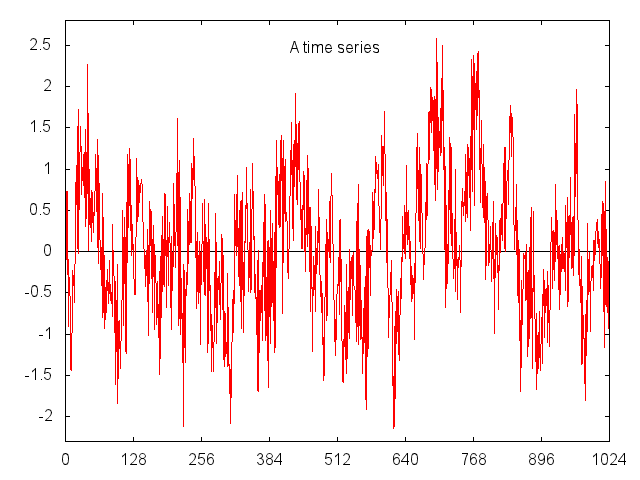
Time Series Analysis attempts to understand the past and predict the future. It belongs to a broad range of Data Science, and its objective is: given a time series, or an ordered, often temporal, string of data points, predict its future values. Time series often arise when monitoring natural or industrial processes, taking consecutive measurements of a quantity or tracking corporate business metrics. Time Series Analysis accounts for the fact that data points taken over time may have an internal structure, such as autocorrelation, trend, or seasonal variations that should be accounted for, but at the same time data points are contaminated by random noise. Methods developed within Time Series Analysis are frequently used in other areas, like signal or image processing.
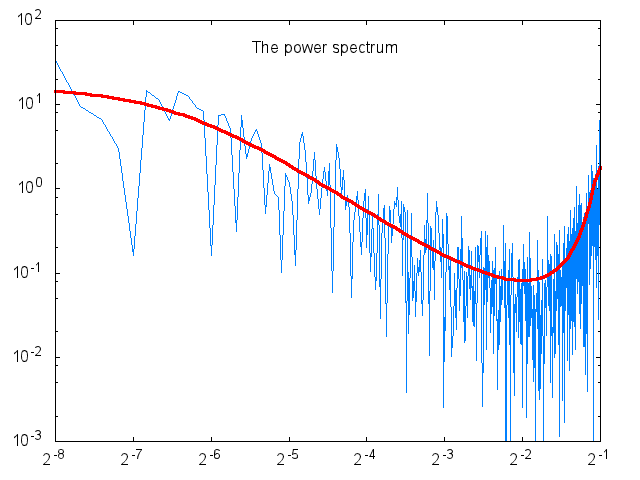
The course will cover the following subjects: Fast Fourier Transform - the power spectrum - smoothing and denoising - digital linear filters - "classic" linear models (AR, MA, ARMA, ARIMA, GARCH) - fractional models (ARFIMA) - Detrended Fluctuations Analysis - multivariate time series - wavelets - nonlinear prediction.
To complete the course, a student will need to attend the lectures and complete 5 home assignments.
The use of R or Python programming languages for the assignments is recommended, but not required; you may use any programming language or
package of your choice.
Some useful links:
Bibliography:
Copyright © 2009-24 P. F. Góra. Wszystkie materiały
zamieszczone na tej stronie są chronione prawem autorskim. Materiały te mogą
być wykorzystywane do samokształcenia i w niekomercyjnych celach dydaktycznych, pod warunkiem zachowania niniejszej
informacji o prawach autorskich.
Copyright © 2009-24 P. F. Góra. All materials published here are copyrighted.
Permission is granted to use them for self-study or non-commercial teaching, provided this copyright
notice is preserved.
Mój blog prywatny